
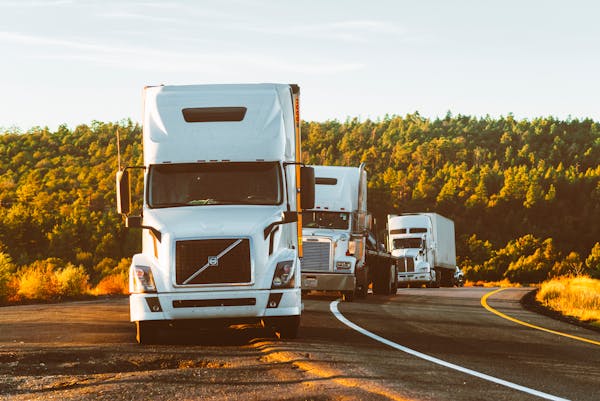
You just bought a car across the country — a classic, a luxury sedan, or maybe the sports car you’ve wanted for years. Now the question hits: how do you get it home without adding rock chips, weather damage, and 2,000 extra miles to the odometer before you even park it in your garage?
That is exactly the problem enclosed auto transport solves. But figuring out what it actually costs is another headache entirely. One broker says $800. Another quotes $2,400 for the same route. Some add fees you never saw coming. And almost every article you find is written by a broker who stands to profit from whatever number they show you.
This guide cuts through that noise. We will walk through real enclosed transport costs by distance, vehicle type, and season — using publicly available industry data and carrier rate structures — so you know what is reasonable before you ever pick up the phone.
Enclosed vs Open Transport: When the Upgrade Is Worth It
Open auto transport is the default. Cars ride on a multi-level trailer exposed to sun, rain, road salt, and whatever kicks up from the highway. It is safe enough for daily drivers — millions of cars ship this way every year without incident — and it costs less.
Enclosed transport loads your vehicle inside a fully covered trailer, typically a hard-sided or soft-sided carrier. The trailer walls block everything: gravel, weather, UV exposure, and prying eyes. This is the standard for collector cars, exotics, luxury vehicles, and anything freshly painted or restored.
When enclosed transport is worth the premium:
- Classic or collector cars — A single rock chip on a concours-quality paint job can cost more to repair than the shipping itself.
- Exotics and high-value luxury vehicles — Ferraris, Lamborghinis, Bentleys, and high-end Mercedes/Porsche models ship enclosed by default.
- Fresh restorations or custom paint — If you just spent $5,000–$15,000 on bodywork, enclosed transport is a fraction of that investment.
- Winter cross-country shipping — Road salt and de-icing chemicals on a 2,000-mile winter route will coat every surface of an open-transported car.
- Brand-new vehicles with temporary tags — Some buyers prefer enclosed for a new car that hasn’t yet been ceramic-coated or paint-protected.
When open transport is fine:
- Daily-driver sedans and SUVs with normal wear
- Vehicles more than 5 years old with standard factory paint
- Short-haul moves under 500 miles in fair weather
- Dealer-to-dealer inventory transfers
Real Enclosed Auto Transport Costs by Distance
Enclosed transport rates follow a predictable structure. Carriers set base minimums to cover loading, permits, insurance, and driver time — then add a per-mile rate that decreases as the trip gets longer. All ranges assume a standard sedan or mid-size vehicle; SUVs, trucks, and oversized vehicles add 10–25%.
Short Haul: Under 500 Miles
- Cost range: $600–$1,200
- Per-mile equivalent: $1.20–$2.40/mile
- Example route: Chicago to St. Louis (~300 miles) — expect $700–$1,000 enclosed.
Mid-Range: 500–1,500 Miles
- Cost range: $900–$2,000
- Per-mile equivalent: $0.90–$1.40/mile
- Example route: Dallas to Phoenix (~1,000 miles) — expect $1,000–$1,600 enclosed.
Cross-Country: 1,500–3,000+ Miles
- Cost range: $1,500–$3,000+
- Per-mile equivalent: $0.75–$1.10/mile
- Example route: Miami to Seattle (~3,300 miles) — expect $2,400–$3,200 enclosed.
How Vehicle Type Affects Enclosed Transport Pricing
| Vehicle Category | Premium Over Base Rate | Why |
|---|---|---|
| Standard Sedan/Coupe | Base rate | Fits anywhere, low weight, standard insurance |
| Mid-Size SUV/Crossover | +10–15% | Wider and taller — fewer vehicles fit on same trailer |
| Full-Size SUV/Truck | +15–25% | Heavy and long — takes up 1.5–2 standard spots |
| Sprinter/Oversized Van | +25–40% | Height often exceeds enclosed trailer clearance |
| Classic/Low Clearance | +10–20% | Requires lift gate or ramps, extra loading time |
| Non-Running/Inoperable | +$150–$300 flat | Requires winch loading — 2–3x longer to load |
Enclosed Transport Pricing by Season: When Rates Rise (And When to Ship for Less)
Enclosed auto transport prices are not flat year-round. Seasonal demand swings can add or subtract 20–30% from your quote — yet almost no broker explains this upfront. Understanding the seasonal cycle is the single most actionable way to save money on enclosed transport.
Peak Season: May through September (+15–25%)
Summer is the busiest season for auto transport — and enclosed carriers are in highest demand. Snowbirds return north, auction season peaks (Barrett-Jackson, Mecum, RM Sotheby’s), families relocate during school breaks, and collector-car owners attend summer shows. The supply of enclosed carriers doesn’t increase to match, so prices rise. Expect to pay $200–$500 more for the same enclosed route in July compared to January.
Shoulder Seasons: March–April and October (Base Rates)
These transition months offer the best balance of availability and price. Weather is generally cooperative, demand hasn’t spiked, and carriers aren’t yet booked solid. If you have flexibility on timing, shipping in March–April or October can save 10–15% versus peak summer rates without the winter delay risk.
Off-Peak: November through February (−10–20%)
Winter shipping costs less because fewer people move cars. Carriers have more availability and compete on price to fill their trailers. However, the money you save on the quote may be offset by weather delays — snow and ice on northern routes (I-80 through Wyoming, I-90 through Montana) can add 2–4 days to transit, and that has a cost in time. For enclosed transport specifically, winter is when the enclosed premium is most justified — a salted, ice-crusted open carrier is no place for a collector car.
Event-Driven Price Spikes
- Barrett-Jackson Scottsdale (January): +10–15% on Arizona routes as thousands of collector cars ship in and out
- Pebble Beach/Monterey Car Week (August): +15–20% on all California routes — enclosed carriers book out months in advance
- Major auction weekends (Mecum Kissimmee, Amelia Island): Regional rate spikes of 10–20% for two weeks on either side
- Hurricane evacuation zones: Irregular but significant — rates can double overnight for outbound Gulf Coast shipments
Seasonal Cost Comparison: Same Route, Same Vehicle, Different Months
Enclosed transport cost for a Porsche 911, Los Angeles to New York (~2,800 miles):
| Shipping Month | Estimated Enclosed Cost | Season | Notes |
|---|---|---|---|
| January | $2,000–$2,300 | Off-Peak | Lowest rates. Possible weather delays on I-80/I-70. |
| March | $2,200–$2,500 | Shoulder | Good balance of price and weather. Recommended. |
| July | $2,600–$3,000 | Peak | Highest demand. Book 3-4 weeks ahead for enclosed. |
| October | $2,200–$2,600 | Shoulder | Rates falling. Good availability. Ideal for snowbirds heading south. |
| Late August (Monterey Car Week) | $3,000–$3,400 | Event Spike | Enclosed carriers near CA scarce. Book 6+ weeks ahead. |
The takeaway: If you can avoid shipping during peak summer (June–August) and major auction events, you can realistically save $400–$800 on a cross-country enclosed transport.
Hidden Fees in Enclosed Transport Quotes
- Fuel surcharge: Some brokers quote the base rate without fuel, then add $50–$200 at booking.
- Residential pickup/delivery fee: $100–$300 if the enclosed trailer can’t access your location.
- Expedited/priority dispatch fee: $200–$400 for pickup within 48 hours.
- Storage/yard fees: $25–$50/day if car arrives before you’re ready.
- Insurance gap fees: Extra cost to increase cargo coverage for high-value vehicles.
Soft-Sided vs Hard-Sided Enclosed Trailers
- Soft-sided enclosed: Canvas covering over frame — protects against weather and UV. Costs 10–20% less. Adequate for most collector cars.
- Hard-sided enclosed: Rigid box trailer — maximum protection against weather, debris, and minor collisions. Recommended for vehicles worth $100,000+. Costs 15–25% more.
Most carriers default to soft-sided unless you specify hard-sided — so be explicit if you need the upgrade.
Protecting Yourself: Insurance, Paperwork, and Red Flags
- Verify the carrier’s insurance. Look up their MC or DOT number on the FMCSA Licensing & Insurance site. Read our guide on car shipping insurance gaps.
- Document your car’s condition. Take timestamped photos from every angle on pickup day.
- Inspect the Bill of Lading. Do not sign at delivery until you’ve walked around your car. Full process: what to do if your car arrives with shipping damage.
- Watch for broker red flags. Read our 10 red flags guide.
Frequently Asked Questions
How much does enclosed auto transport cost per mile?
Enclosed auto transport typically costs $0.75 to $1.50 per mile depending on distance, vehicle size, and season. For a standard sedan on a 1,000-mile route, expect roughly $900–$1,400. Longer coast-to-coast routes (2,500+ miles) can drop closer to $0.75/mile due to efficiency.
How much can I save by shipping in the off-peak season?
Shipping enclosed during the off-peak season (November–February) can save 10–20% compared to peak summer rates. On a cross-country enclosed transport that might cost $2,600–$3,000 in July, the same route in January could run $2,000–$2,300 — a $600–$800 difference. Shoulder seasons (March–April and October) offer the best balance of price and availability.
Is enclosed auto transport worth the extra cost over open transport?
Enclosed transport is worth the premium if your vehicle is a classic car, exotic, luxury vehicle, freshly restored, or has a custom paint job. The price difference is typically 30–50% more than open transport. For a daily-driver sedan, open transport is usually sufficient — but for anything you’d hesitate to park in a hailstorm, enclosed is the right call.
Does enclosed auto transport include insurance?
Yes, all licensed carriers are required to carry cargo insurance. However, coverage limits vary — most enclosed carriers carry $250,000 to $1,000,000 in cargo insurance per truck, not per vehicle. Always verify the carrier’s insurance certificate before booking. Learn more in our car shipping insurance gaps guide.
What hidden fees should I watch for in enclosed auto transport quotes?
Common hidden fees include fuel surcharges, residential pickup fees ($100–$300), expedited booking fees, storage fees, and insurance gap fees for high-value vehicles. Always request a line-item breakdown before booking.
When is the cheapest month to ship a car via enclosed transport?
January and February are typically the cheapest months, with rates 10–20% below peak summer pricing. March–April and October offer nearly the same savings with less weather risk — these shoulder months are the smartest time to ship for most customers.
Ready to ship your car? Get a free, no-obligation quote in minutes — no deposit required to see your price.
Get My Free Quote
or call (224) 414-2700
Related: Enclosed Auto Transport · Car Shipping Quote Calculator